
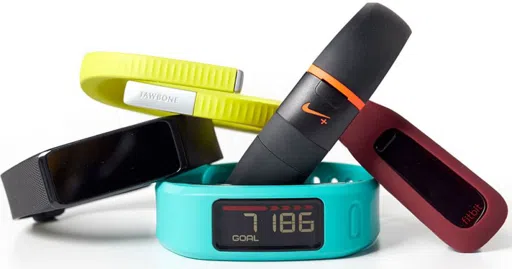
If you use a fitness tracker, you’re not alone. Next time you’re working out at the YMCA, look around you and do a quick tally. According to a study by Juniper research, activity trackers will be used by more than 1 in 5 Americans by 2021. But, the reasons why are interesting.
It may come as a surprise to know that, studies published in the Lancet and the Journal of the American Medical Association found that wearing activity trackers had no effect on overall health and fitness; however, these studies were conducted between 2010 and 2014 using basic fitness trackers (fancy pedometers) and weight-loss was how progress was measured. The lack of functionality meant the novelty soon wore off and most people stopped wearing them after six months.
Today’s activity trackers offer so much more and although many people believe that using a fitness tracker will improve their fitness, the promise of a healthier life has been the biggest draw. Improvements in technology has led to a smorgasbord of health facts being available to the user via the fancy software that supports the trackers. These motivating trackers do so much more to retain the users’ attention, so they have become more addictive. With realistic goal-setting and gentle reminders to get up and move after long periods of inactivity, people are finding features they actually want to use.
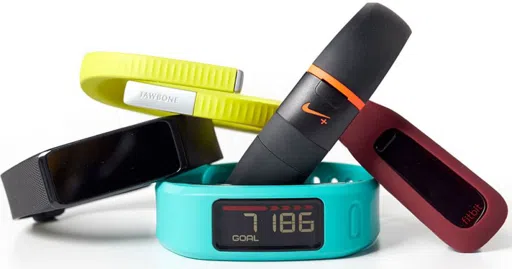
My journey with activity trackers began a few years ago, before I’d even considered investing in a SmartPhone. I decided I wanted a wearable fitness tracker to record the mileage of my runs and check my pace. I also wanted access to some of those cool graphics that come with trackers but didn’t want to carry a bulky phone around with me.
I researched online and checked out the local tech stores to see what was out there. My choices at the time were limited to Garmin, TomTom and Nike+. The first two were out of my price range so I decided to go with the Nike+. It was a bit clunky but it had GPS, a nice clear screen and had options to sync a shoe pod for increased accuracy or add a chest heart rate monitor for additional information. It also had a reasonable battery life and could be recharged by plugging it directly into the USB port of a computer.
Compared with today’s choices, the Nike+ was fairly primitive but it served a purpose and the software gave me some cool graphics. The shoe pod was a neat add-on too. Eventually, the wrist strap broke and, following some health problems, I decided I wanted something that also recorded heart rate.
It took me a while to sift through the multiple fitness trackers on the market but I ultimately chose the Fitbit Charge 2 because it has a reliable built-in heart rate monitor. Another cool feature is that it monitors sleep patterns. Even with my best intentions of leading a healthy lifestyle—healthy diet, regular exercise, don’t smoke and rarely drink alcohol—I have a tendency to short-change my body of sleep. Yet, with the Fitbit app on my phone, I love checking on my sleep cycle!
I’ve only had this fitness tracker for two months but I see how it can become addictive. I get statistics that show the number of flights of stairs I’ve climbed as well as how many steps I have taken. I can see how often I get up and move, how many calories I’ve burned and what my heart rate doing during different exercise classes. It’s so fascinating, I don’t like taking it off! Now I’m hooked, I’ll be checking out what activity tracker everyone else is wearing next time I visit the YMCA.
By Carole Wirszyla
Freelance Writer
wirszylac@gmail.com
910-274-3989